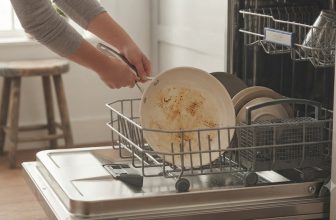


Dishwasher Cycles Remove Thermobond Binder From Aluminum Pans
Alkaline solution attacks the binder matrix during heated wash and dry phases. Ceramic particles detach. The metal base becomes visible. Hot water and agitation widen gaps in the surface. Food begins to catch on the exposed aluminium.
Heated Dry Phase Accelerates Particle Loss
The final heated dry step raises temperature above 60 °C. Residue hardens on the surface. Remaining ceramic fragments separate from the exposed metal. Towel drying after the wash retains more particles.
Neutral Hand Washing Leaves Thermobond Layer Intact
Neutral hand washing with a soft sponge keeps the Thermobond coating on the pan. Mild soap at room temperature does not break down the layer that holds the ceramic bits in place. Dishwasher detergents loosen that layer. Ordinary washing up liquid does not.
A soft sponge shifts the food bits without cutting into the surface. The pan stays at normal sink temperature. It never goes through the hot and cold swings inside a dishwasher. The same coating that handles a metal spatula now and then also handles light sponging without trouble. That is why the label says hand wash only.
Sponge Contact Alone Causes No Matrix Erosion
A soft sponge moves over the Thermobond coating without wearing it down. The rounded fibres slide across the surface instead of digging in. The finish stays smooth.
Ceramic coatings only start to thin when something softens the layer underneath or scrapes it with something harder than the coating itself. A kitchen sponge does neither. It leaves the original feel of the pan unchanged after hundreds of washes. Hand washing removes both the strong chemicals and the moving water, so the coating keeps its thickness.
High Induction Heat Alone Weakens Thermobond Without Dishwasher Use
Searing on high induction heat strips the Thermobond coating even with hand washing only. The heat enters the base directly and softens the binder. Ceramic particles then detach during stirring. Induction focuses energy in the metal. This creates local overheating that breaks the coating matrix over repeated uses. Bare metal appears and food sticks. Keep heat at medium and warm the pan slowly to limit damage.
Thermal Expansion Separates Ceramic Particles From Base
The metal base expands faster than the ceramic particles. This stretches and cracks the binder. Cracks let particles come loose during cooking. Rough spots form and catch food. The expansion starts with heat application. Thicker bases worsen the effect. Thinner walls or lower-expansion aluminium slow the loss. Roughness after searing means lower the temperature next time.
Low Heat Simmer Cycles Preserve Thermobond Matrix Integrity
Limited temperature rise and quick cooling prevent expansion stress and binder softening in the hybrid layer. The surface starts tough against metal tools but softens with high heat or acidic food. Low heat stops the softening. Dishwashers use hot water and strong soap that thin the surface until metal shows and food sticks.
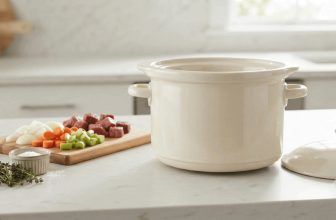
Cooks on gas or induction keep the flame or element on low or medium low and lift the pan off once the simmer ends. This avoids the heat soak from a dishwasher dry cycle. The same rule works for ceramic slow cookers. Turn the unit off and pull the insert out straight away.
Rapid Cool Down Prevents Bond Fracture
Quick return to room temperature limits differential expansion between coating and aluminum base. A hot pan in cold water or on a cold bench creates weak spots where the coating lifts. Those spots grow with each heat cycle until the metal base shows.
Source material on ceramic non-stick shows the surface loses slip fastest after high-heat searing or machine washing because both create sharp temperature swings. Low heat simmering and then leaving the pan on the turned-off burner lets it cool evenly. On induction switch the element off and leave the pan where it is for a few minutes. Once food starts catching or scratches appear switch to hand washing and air cooling to slow further wear.