Is Ceramic Cookware Safe For Dishwasher And Long Term Use
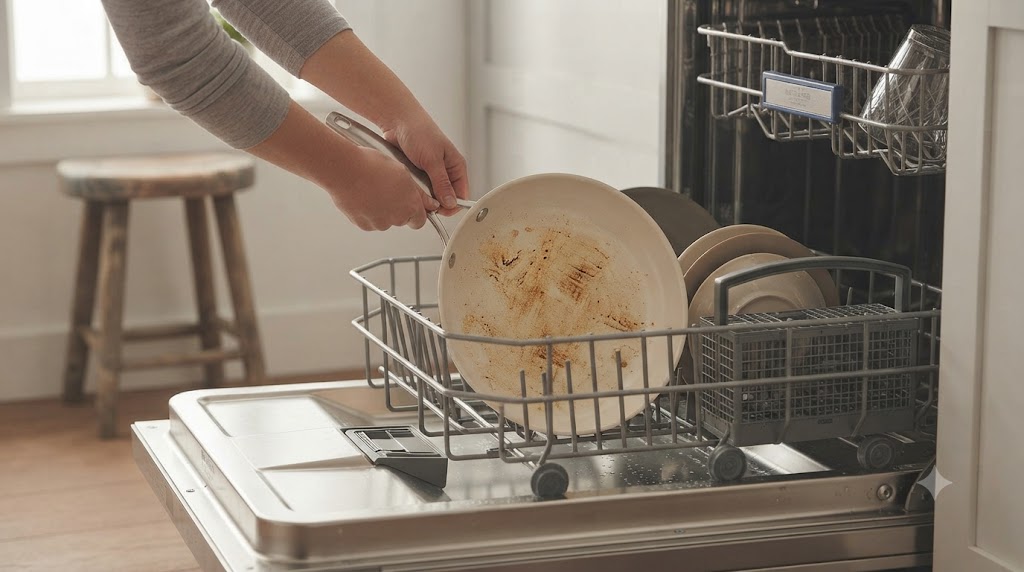
Is Ceramic Cookware Safe After Routine Dishwasher Cleaning
Most buyers bring home a ceramic-coated pan expecting its smooth glide to last for years. The box promises smoke-free cooking and simple upkeep. Yet once the pan faces repeated dishwasher cycles, questions quickly arise about long-term safety.
Ceramic coatings are not solid ceramic. They form a thin film over aluminium or stainless steel. The base metal handles heat distribution while the film prevents food from sticking.
Dishwasher cycles use hot water, strong detergents and forceful spray. These elements gradually erode the protective layer. Manufacturers often label pans as dishwasher safe, but that claim usually covers short-term survival rather than years of daily use.
The real change appears in daily performance. A new pan releases food with little effort. After many washes the surface can lose its smoothness. Food starts to cling in spots and cleaning becomes harder.
At that point the question sharpens. Has the film thinned enough to let the base metal touch food? Most quality ceramic coatings contain no PTFE or PFOA. The main risk comes from physical wear rather than chemical release.
Clarifying What Safe Means Over Months Of Use
Safe cookware keeps food from direct contact with the underlying metal. It also avoids shedding particles into meals. Non toxic cookware materials rely on stable films that resist heat and chemicals.
In busy homes with frequent cooking the dishwasher offers real convenience. The same routine speeds up wear compared with hand washing. Parents might notice the pan still looks fine from a distance while the film has thinned enough to allow trace aluminium exposure during acidic cooking.
Check the surface under bright light every month after the first three months. Look for dull patches, fine scratches or edges where the film begins to lift. Once these signs appear, switch to occasional hand washing or retire the pan from regular use.
Different ceramic formulations offer varying resistance. Multi-layer versions often include a harder top film that handles detergent better. Single-layer options tend to show wear sooner. Follow the manufacturer’s specific care advice rather than relying only on the initial label.
Key Factors Influencing Ceramic Cookware Safety Over Time
Ceramic cookware uses a non-stick coating over a metal base, most often aluminium or stainless steel. Safety over years depends on how well that coating holds up to heat, cleaning and daily knocks.
Aluminium expands and contracts quickly with temperature swings. Stainless steel stays more stable, which changes how the coating sits on top. Both metals create different stresses on the ceramic layer.
Manufacturers test hardness and adhesion with scratch and thermal shock trials. Even strong coatings lose surface strength after repeated heating and cooling.
Users usually spot early problems when food starts to stick in patches or the surface loses its shine. These signs often appear before any flaking shows. Two pans that look the same on day one can behave differently after six or twelve months because of these variables.
The Effect Of Dishwasher Cycles On Coating Integrity
Dishwasher safety matters for non toxic cookware materials. Alkaline detergents, high-pressure jets and heat speed up wear on ceramic surfaces.
Most ceramic coatings use a silica-based sol-gel layer. This layer avoids PTFE, yet it can still suffer chemical etching and abrasion over time.
Detergents contain sodium carbonate and enzymes that break down food. The same agents slowly eat into thinner or less cured sections of the coating. Water jets create micro-abrasion when pans sit flat on the lower rack.
Many Australian households run two loads a day after family meals. Fast cycles often raise water temperature to finish quicker, which increases expansion of the metal base while the coating stays wet.
Manufacturers label many ceramic products as dishwasher safe. The claim usually means no immediate damage, not long-term durability. Pans stacked so they rub together or placed on the bottom rack lose non-stick performance faster, often within one to two years.
Hand-wash pans used for high-heat searing or acidic sauces. Check the maker’s instructions for temperature limits and cycle advice instead of relying on the general label. Selective use protects the coating while still allowing convenience for other items.
Heat Exposure And Everyday Cooking Demands
Day after day of steady medium heat—around 180–200 °C—imposes a quiet, unrelenting strain. The temperature is gentle enough for even cooking, yet it still nibbles at the coating’s resilience, meal after meal.
In a typical apartment kitchen, families often prepare lunches and dinners back-to-back. A person might cook eggs or vegetables at medium heat, then store leftovers and repeat the process the next day. This pattern works well when the cook keeps the burner setting moderate and allows the pan to cool slightly between batches. The coating stays smoother longer because it avoids sudden expansion and contraction that occurs with rapid high-heat bursts.
Few habits wreck a ceramic pan faster than the impatient twist to maximum heat. In the rush for quicker browning, localised infernos bloom, well past the coating’s threshold. The surface pays the price in patches and lost glide.
Ceramic coatings differ from traditional non-stick finishes because they contain no PTFE, which makes them appealing for those seeking non toxic cookware materials. However, the same heat sensitivity applies. Stainless steel or cast iron alternatives handle high heat without coating concerns but require different oiling or seasoning routines. Ceramic remains useful when users accept its preference for gentler heat and avoid metal utensils that can scratch the surface.
Manufacturer data and long-term kitchen trials converge on the same range: two to five years of reliable service under moderate heat and careful cleaning. After that, even the most fastidious owner will notice the slow fade—dullness, hesitation, the quiet demand for replacement. Checking the surface regularly for dull spots or increased sticking helps decide when replacement makes sense.
Identifying When Ceramic Cookware Is No Longer Safe
Ceramic cookware loses safety when the protective layer starts to wear. The non-stick film keeps food away from the metal base. Once that barrier thins, the pan no longer meets the standard for non toxic cookware materials.
Replacement depends on visible wear rather than a set date. Most ceramic coatings last one to three years with normal use. Machine washing speeds up damage through heat and strong detergents. Users who see problems after regular dishwasher loads usually realise the surface has changed.
Visual And Functional Signs Of Declining Safety
Stubborn grey or brown marks that stay after cleaning show the ceramic layer has thinned. Food residues now bond to the base beneath. These stains do not prove toxins are present, yet they confirm the original non-stick finish has gone.
Fine lines or dull patches appear where metal utensils have scraped the glaze. Deep scratches expose the aluminium underneath. Acidic foods such as tomatoes can then react with the bare metal. Shallow marks may stay cosmetic, but any groove that catches a fingernail needs checking.
Food that sticks despite oil or proper heat reveals the surface has lost smoothness. Tiny pores open as the ceramic degrades. The same pan may now need extra oil or lower temperatures to avoid burning.
Light clouding from hard water often lifts with vinegar and does not harm the coating. Persistent discolouration paired with sticking, however, points to real wear. Many people throw pans away too soon, while others keep using ones that should be replaced.
Edge wear shows first after weekly machine washing because water collects there. The centre stays smoother longer when only silicone tools are used. Checking both areas after each clean catches uneven damage early.
No home test can measure chemical release. Industry checks focus on new products only. When several signs appear together, replacement removes doubt and keeps the goal of using non toxic cookware materials.
Dishwasher Loading Habits That Cause Damage
Stacking pans is the fastest route to ruin. When edges grind against each other through an entire cycle, even a gentle 45-minute wash can etch hairline fractures invisible to the casual eye. These fractures quietly open corridors to the vulnerable aluminium beneath.
Leaving metal spoons, tongs or knives inside the pans creates another common source of wear. The metal items shift and strike the coated surface repeatedly. A single impact rarely shows, yet repeated contact over weeks produces micro-abrasions that accumulate. Water then reaches the aluminium core, which can oxidise and affect both appearance and cooking performance.
Consider a typical rushed morning in a suburban kitchen. A parent loads several ceramic frying pans, drops metal spatulas inside one, and presses a stack of plates on top before starting the cycle. By the time the family returns, the surfaces have endured both abrasion and pressure. Over months this pattern dulls the coating and reduces the non-stick behaviour.
Not every ceramic pan reacts the same way. Higher-quality coatings applied in multiple layers with reinforced bonding tolerate occasional overcrowding better than single-layer budget versions. The general rule still holds: treat the surface as a finish that can be compromised rather than an indestructible layer. Users who want to maximise longevity usually wash pieces by hand or place them on the top rack with space and no metal objects inside. Always check the manufacturer’s care instructions for specific heat and detergent limits.
These loading practices matter because damaged ceramic loses the very properties that qualify it among trusted non toxic cookware materials. Once the coating thins, food begins to stick and requires more oil or higher heat. Careful habits preserve both the safety margin and the practical cooking advantages without extra expense.
Errors That Reduce The Longevity And Safety Of Ceramic Cookware
Ceramic cookware earns its reputation as a non toxic cookware material because the ceramic coating contains no PFAS or heavy metals when new. Still, everyday habits can wear that layer down. Once the coating thins or cracks, the aluminium or stainless steel underneath may touch acidic foods. Many people ask is ceramic cookware safe after months of regular use. The answer depends on how the surface is treated.
Daily choices around heat, tools and storage all matter. Cleaning decisions often cause the quickest damage. The surface can look clean while the coating loses smoothness and thickness. Spotting these patterns early helps users adjust before any safety issue appears.
Overlooking Cleaning Product Choices And Their Consequences
Conventional dishwasher tablets contain alkaline builders and enzymes that cut through grease. Those same ingredients gradually micro-etch ceramic coatings made for milder conditions. The coating acts like a thin glass skin. Repeated exposure to strong alkaline solutions dulls the finish and opens tiny pores. Food acids and detergent residues then collect in those pores and speed up further wear.
Abrasive pads inflict parallel damage through friction. Even nylon scrubbers labelled gentle leave fine scratches after repeated use. Oils settle into the scratches, carbonise during cooking and create stubborn spots that no longer release food. Some families switch to eco-certified cleaners expecting gentler results. Certain plant-based formulas still use sodium carbonate or citric acid at levels that affect coatings over time. The “non toxic” label on these products refers to human health and waterways, not material compatibility with ceramic.
Expert advice starts with the instructions on the product box or website. Most makers recommend hand washing with mild pH-neutral soap and a soft sponge. When a dishwasher is necessary, choose a delicate cycle, place pieces on the top rack and skip long pre-soak options. Never pour concentrated detergent straight onto the surface. Never stack wet pieces without a protective layer between them. Never attack burnt residue with metal scourers. Each of these actions either removes coating or traps moisture that can corrode exposed metal edges.
Test the coating regularly by checking how freely food releases. Dull patches or increased sticking signal that maintenance needs review. Replacing the item at that stage prevents any further risk from worn coating.
Practical Ways To Assess If Your Ceramic Cookware Is Still Safe
Ceramic cookware keeps its non-stick performance only while the glaze stays intact. Once that glaze thins or develops fine cracks, food can touch the layer beneath. Regular checks catch these changes early.
Dishwasher cycles speed up the damage. Hot water and strong detergents strip years from the glaze in a single run. Simple tests at home let you track the condition yourself.
Simple Home Tests For Condition And Safety
Run the water droplet test on a cool pan. Place a few drops across the base and sides. The water should pearl and roll away when you tilt the pan. Flat spreading or quick absorption shows the glaze has lost its protective quality.
Test every area because wear rarely shows evenly. Always dry the pan fully before you cook. Any leftover moisture will give a false reading.
Next, try the low-heat test after a dishwasher cycle. Warm the empty pan on low for two minutes. Add a small amount of oil and watch how it moves. Smooth spreading without dark streaks or sudden sticking means the surface is still sound. Hesitation, streaking, or quick discolouration points to early breakdown.
Repeat both checks every three months if you cook daily for a family. Many people wait until food sticks visibly before they act. By then the glaze has already thinned enough to affect safety and performance.
Thinner budget coatings often fail the droplet test before 50 dishwasher runs. Thicker professional layers last longer under the same conditions. Compare results to how the pan behaved when new rather than to other pieces you own.
If either test fails, replace the item. Continued dishwashing will only speed up further wear. These checks take a few minutes and need no special tools. They give steady confidence that your cookware remains safe for everyday use.
When To Replace Ceramic Cookware To Maintain Family Safety
Ceramic cookware stays safe only while the coating stays intact. Scratches, chips or thinning let the base material touch food. This shift decides whether your pans remain suitable for daily meals. Check the surface rather than watching the calendar.
Dishwashers and metal utensils speed up wear. A pan that still looks smooth can hide tiny damage that weakens its non-stick performance. Families who cook often and run the dishwasher every day should inspect their cookware more frequently than occasional users.
Replace pieces when the coating flakes, changes colour inside the cooking area, or food starts sticking in new spots. At that stage the original protection against metal contact no longer works. Acidic foods such as tomato sauces make the problem worse.
Weighing Price To Performance For New Purchases
Match expected lifespan to how often you cook and clean. Heavy dishwasher use shortens coating life. Basic ceramic pans often show wear after 12 to 18 months under daily cycles. Thicker, multi-layer coatings from established brands can add another year or more.
Look for products that state coating thickness or offer warranties that cover normal household use, including dishwashers. Cheaper options usually have thinner layers that degrade faster with detergent and hot water. Spending an extra $30–50 per pan can lower the cost per year of reliable service.
One household bought an entry-level set and saw sticking plus surface dullness after 18 months of daily dishwasher use. They replaced the main frying pan with a mid-range model that listed a reinforced coating. The new pan held up better on the same routine because the ceramic layer was thicker.
Several points guide choices in the Australian market. Confirm the coating contains no PTFE or PFOA. Note whether the base is aluminium or stainless steel, as each affects heat spread and how long the coating lasts. Light-use kitchens can choose lower-priced items. Daily cooks gain more from stronger coatings. Check stock at major retailers so replacements stay easy to find.
How often should you check the coating? A quick look and fingertip test every three months works for most homes. Is premium ceramic worth the extra cost over mid-range? It depends on whether the cheaper version lasts 18 months under your cleaning habits. Does the base material matter once wear starts? Yes. Exposed aluminium can react with acidic foods, which is why surface checks stay important.
No single type of cookware fits every kitchen or budget. Some families hand-wash to extend ceramic life. Others accept earlier replacement for dishwasher convenience. Weight, handle shape and storage needs also shape the final decision.

Hey there, I’m Ray Winson—digital marketer by day, food enthusiast pretty much all the time. I love diving into everything kitchen-related, whether it’s testing out a new skillet, tinkering with family recipes, or discovering quirky cooking hacks. Cooking, for me, is equal parts adventure and therapy—and I’m here to share that journey with you.